
Table of Contents
- Quick Answer
- Chickpea vs Soy: At a Glance
- How Nattokinase Is Produced: The Fermentation Process
- The Substrate Distinction: What Stays in the Final Product
- Soy Allergies and Nattokinase: What the Research Shows
- Phytoestrogens in Soy: A Separate Concern
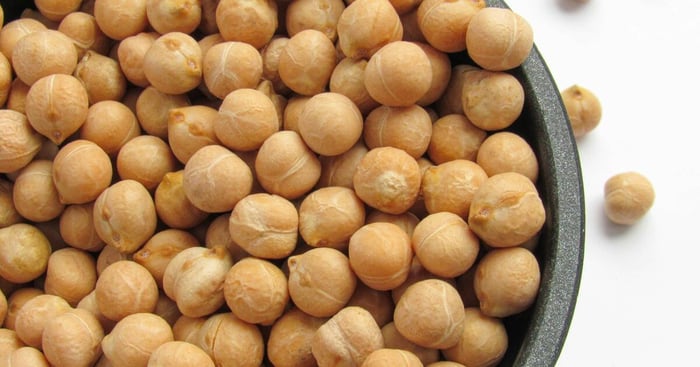
- What Chickpea Brings to Fermentation
- The Clinical Evidence for Nattokinase (Regardless of Substrate)
- What to Look for When Choosing a Soy-Free Nattokinase
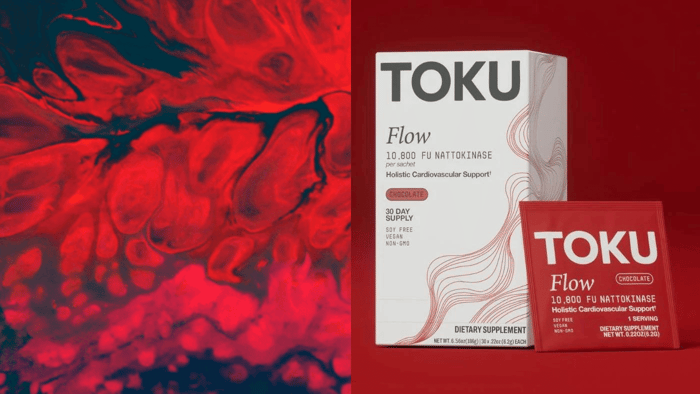
- Toku Flow: Chickpea-Based, Soy-Free Nattokinase at the Clinical Dose
- FAQs
- References
Soy-Free Nattokinase: Chickpea vs Soy Fermentation Explained
Quick Answer
Soy-free nattokinase is produced by fermenting Bacillus subtilis on a chickpea substrate instead of soybeans — delivering the identical nattokinase enzyme with zero soy allergens or phytoestrogens.
- The nattokinase enzyme is chemically identical whether fermented on soy or chickpeas — the substrate feeds the bacteria, it is not a structural component of the enzyme
- Traditional nattokinase supplements are soy-derived; many carry residual soy allergens, and soy contains isoflavone phytoestrogens that some consumers want to avoid
- Approximately 0.4% of Americans have a diagnosed soy allergy; many more avoid soy for hormonal or digestive reasons
- Chickpea-fermented nattokinase can be third-party allergen tested and certified soy-free
- What to look for: "chickpea-fermented," "soy-free certified," and a Certificate of Analysis (CoA) from an accredited lab
Chickpea vs Soy: At a Glance
| Factor | Soy Substrate | Chickpea Substrate |
|---|---|---|
| Nattokinase yield (cracked, optimized) | ~290 FU/g | 356 FU/g (+22%) |
| γ-PGA co-production | ~68 g/kg (high) | ~19 g/kg (72% lower) |
| PGA allergy risk | Present | Substantially reduced |
| Soy allergen present | Yes (top-9 FDA allergen) | No |
| Phytoestrogens | Genistein, daidzein (higher) | Biochanin A, formononetin (lower) |
| Antioxidant enhancement | Moderate | +222% phenolics, +71% flavonoids |
| Purification difficulty | Higher (high γ-PGA viscosity) | Lower (less γ-PGA) |
| FDA allergen labeling required | Yes — must declare soy | No soy declaration needed |
| Nattokinase enzyme activity | Identical | Identical |
Sources: Wei et al., PMC10923668, PubMed 21391672
Nattokinase is traditionally made by fermenting soybeans — the same fermented soybean food (natto) that Japanese cuisine has relied on for over a millennium. But the enzyme itself is not from the soy. It is produced by the bacterium Bacillus subtilis, and the soybean is simply the fermentation substrate — the food the bacteria grows on.
This distinction matters because modern nattokinase production has moved beyond the single-substrate limitation of traditional natto. Today, Bacillus subtilis can be fermented on alternative legume substrates, including chickpeas — producing identical nattokinase enzyme activity while eliminating every soy-related concern in one step.
If you have a soy allergy, are sensitive to phytoestrogens, or simply prefer to avoid soy for any reason, understanding this distinction helps you make an informed supplement choice.
How Nattokinase Is Produced: The Fermentation Process
Nattokinase is a serine protease enzyme secreted by Bacillus subtilis natto during fermentation. The enzyme was first identified by Dr. Hiroyuki Sumi in 1987 when he observed its potent fibrinolytic activity in traditional natto (Sumi et al., 1987).
In commercial supplement production, the fermentation process involves:
- Strain selection: Choosing a B. subtilis strain optimized for high nattokinase yield and consistent enzymatic activity
- Substrate preparation: Sterilizing and conditioning the legume base — traditionally soybeans, now also chickpeas
- Fermentation: Inoculating the substrate with B. subtilis under controlled temperature, humidity, and timing
- Separation: Isolating the nattokinase enzyme from the fermented substrate mass
- Drying: Spray-drying the enzyme concentrate into a stable, bioavailable powder
Research into optimizing each stage of this pipeline — including strain screening, fermentation conditions, and separation efficiency — demonstrates that production quality directly affects final enzyme potency and purity. Crucially, a study on nattokinase functional food production found that cracked chickpea outperformed cracked soybean, producing nattokinase activity of 356.25 FU/g (dry weight) — 22% higher than cracked soybeans — while also generating far less of the allergenic γ-PGA byproduct (Wei et al., ResearchGate).
Key finding: Under optimized fermentation conditions, cracked chickpea substrate produces approximately 22% more nattokinase than cracked soybean while generating only 28% of the allergenic γ-PGA byproduct — making chickpea a superior substrate on both yield and safety dimensions.
The Substrate Distinction: What Stays in the Final Product
When nattokinase is extracted, separated, and spray-dried, the enzyme is purified away from the original substrate. The nattokinase protein structure and activity are identical whether it originated from a soy or chickpea fermentation.
However, industrial separation is rarely 100% complete. Trace residues from the fermentation substrate — proteins, carbohydrates, and other compounds — can remain in the final powder. This is precisely why substrate choice matters for certain consumers:
From soy-based fermentation, the final powder may contain:
- Residual soy proteins — including allergens classified under the FDA's top-9 major food allergen designation (Gly m 4, Gly m 6, and others)
- Soy isoflavones (genistein, daidzein) — phytoestrogens that bind to estrogen receptors
- Poly-gamma-glutamic acid (PGA) — a sticky fermentation byproduct produced by B. subtilis on soy; soy fermentation produces approximately 3.5× more γ-PGA than chickpea fermentation (~68 g/kg vs ~19 g/kg in the Wei et al. study)
From chickpea-based fermentation, the final powder may contain:
- Trace chickpea residues — from a completely different allergen category than soy and not among U.S. top-9 allergens
- Different isoflavones (biochanin A, formononetin) at lower concentrations than soy — chickpeas are not phytoestrogen-free, but carry a substantially reduced phytoestrogen load compared to soy
- ~72% less γ-PGA than soy fermentation, making purification easier and reducing the risk of PGA-related allergic reactions
The nattokinase enzyme is produced by Bacillus subtilis during fermentation and is chemically identical whether the bacteria grows on soy or chickpeas — the substrate is the bacteria's food source, not a structural component of the enzyme itself.
This single fact is the foundation of soy-free nattokinase: the same clinical-grade enzyme, a different fermentation environment.
Soy Allergies and Nattokinase: What the Research Shows
Soy is classified as one of the nine major food allergens in the United States by the FDA. Approximately 1.5 million US adults have a confirmed soy allergy, with higher prevalence in children. Reactions range from mild hives and gastrointestinal distress to anaphylaxis.
For nattokinase specifically, researchers have identified two distinct allergenic concerns beyond standard soy protein allergy:
1. PGA (Poly-Gamma-Glutamic Acid) Allergy
PGA is a compound produced by Bacillus subtilis during fermentation of soy that creates the characteristic stringy texture of traditional natto. Research has identified PGA as a cause of late-onset anaphylaxis in natto consumers — reactions that are delayed by hours and can be severe. Critically, PGA is a natto-specific fermentation byproduct associated with soy substrate; it is absent in chickpea-fermented nattokinase.
2. Nattokinase as a Novel Allergen
A 2022 study published in the Asia Pacific Journal of Allergy and Immunology (pubmed.ncbi.nlm.nih.gov/36517353) identified nattokinase itself — the enzyme protein, not just the soy substrate — as a novel allergen in a subset of patients who were not sensitized to PGA. This finding means that even soy-free nattokinase carries a theoretical allergenic potential for individuals specifically sensitized to the nattokinase protein. Anyone with a known natto allergy should consult their physician before using any nattokinase supplement, regardless of substrate.
Traditional soy-based nattokinase carries two distinct allergen risks beyond standard soy proteins: poly-gamma-glutamic acid (PGA), a fermentation byproduct linked to late-onset anaphylaxis, and nattokinase itself, identified as a novel allergen in a 2022 study. Chickpea-fermented nattokinase eliminates soy proteins and PGA while preserving enzymatic activity.
Phytoestrogens in Soy: A Separate Concern
Beyond allergy, soy contains a class of compounds called isoflavones — primarily genistein and daidzein — that function as phytoestrogens. These molecules bind to human estrogen receptors (ERα and ERβ) at a fraction of estrogen's potency. The question of whether they meaningfully affect hormonal balance in healthy adults is contested — large meta-analyses have generally found no significant testosterone effects in men and no increased cancer risk in healthy women — but many consumers prefer to minimize phytoestrogen exposure regardless.
An important nuance: chickpeas are not entirely phytoestrogen-free. Chickpeas contain their own isoflavones — biochanin A and formononetin — but at substantially lower concentrations and with different bioavailability profiles than soy isoflavones. For consumers specifically avoiding soy-type phytoestrogens (genistein and daidzein), chickpea-fermented nattokinase achieves that goal.
This concern is relevant to several groups:
Men concerned about testosterone: High soy phytoestrogen intake has been theoretically linked to altered testosterone levels, though clinical evidence at typical doses is not conclusive. Men who actively manage phytoestrogen exposure will find chickpea-fermented nattokinase a lower-risk option.
Women with hormone-sensitive conditions: Women with a history of estrogen receptor-positive breast cancer or other hormone-sensitive conditions may be advised by their oncologist to minimize soy isoflavone exposure. The European Food Safety Authority (EFSA) has flagged that estrogenic isoflavone supplements may pose risk in this population, though evidence at supplement trace levels is limited.
Thyroid patients: Soy isoflavones can interfere with thyroid hormone synthesis and absorption of levothyroxine at high doses. This is generally relevant to substantial soy food intake, but individuals managing thyroid medication timing may prefer to avoid all soy exposure.
Soy contains isoflavone phytoestrogens (genistein, daidzein) that bind to human estrogen receptors. Chickpeas contain different isoflavones (biochanin A, formononetin) at substantially lower concentrations, making chickpea-fermented nattokinase the lower-phytoestrogen choice for individuals managing hormonal health.
What Chickpea Brings to Fermentation
Chickpeas (Cicer arietinum) are a legume whose nutritional profile supports Bacillus subtilis fermentation effectively:
- High protein content (~20% by weight): Provides the nitrogen source that B. subtilis requires for growth and enzyme secretion
- Fermentable carbohydrates: Supplies the energy substrate for bacterial metabolism throughout the fermentation cycle
- Lower phytoestrogen load: Chickpeas contain biochanin A and formononetin — different isoflavones than soy, at lower concentrations
- Not a U.S. top-9 allergen: Chickpeas are not listed among FDA's major food allergens (though individuals with legume cross-reactivity — particularly peanut allergies — should consult their allergist)
Research on chickpea fermentation has also revealed additional benefits beyond allergen reduction. A study using Bacillus amyloliquefaciens fermentation of chickpeas found that the process increased total phenolic content by 222% and total flavonoid content by 71% — significant antioxidant enhancement. The purified fibrinolytic enzyme from that study also demonstrated anticoagulant activity exceeding that of heparin sodium (PubMed 21391672).
Key finding: Beyond allergen elimination, chickpea fermentation can enhance the antioxidant and anticoagulant activity profile of the final product compared to soy fermentation — additional benefits on top of the 22% higher nattokinase yield and 72% lower γ-PGA.
The practical outcome: a properly fermented and spray-dried chickpea-based nattokinase delivers equal or superior Fibrinolytic Unit (FU) counts compared to soy-based counterparts, with substantially reduced allergenic, phytoestrogen, and γ-PGA burden.
The Clinical Evidence for Nattokinase (Regardless of Substrate)
The clinical studies that established nattokinase's cardiovascular benefits measured enzyme activity — and that activity is substrate-agnostic. The leading clinical evidence includes:
The Chen et al. 2022 clinical study, published in Frontiers in Cardiovascular Medicine, enrolled 1,062 participants over 12 months and found that 10,800 FU per day co-administered with Vitamin K2 (180 μg/day) significantly reduced atherosclerosis progression and improved lipid profiles, while the standard 3,600 FU/day dose was ineffective (Chen et al., 2022).
A randomized controlled trial in Hypertension Research found nattokinase supplementation reduced systolic blood pressure by an average of 5.55 mmHg compared to placebo over 8 weeks (Kim et al., 2008).
Research published in Scientific Reports confirmed that orally administered nattokinase is absorbed intact through the intestinal tract and retains fibrinolytic activity in the bloodstream (Kurosawa et al., 2015).
Key finding: The clinically studied dose of nattokinase is 10,800 FU per day. This dose-response relationship holds regardless of whether the enzyme was produced via soy or chickpea fermentation — enzymatic activity, measured in Fibrinolytic Units, is the clinically relevant variable.
For a comprehensive overview of nattokinase's mechanisms and benefits, see: What Is Nattokinase? Benefits, Dosage, Side Effects, and How to Use It
What to Look for When Choosing a Soy-Free Nattokinase
If you're seeking soy-free nattokinase, here's a practical checklist:
On the label:
- "Chickpea-fermented nattokinase" or "soy-free nattokinase" — specifies the substrate unambiguously
- Fibrinolytic Units (FU) per serving — the standardized enzymatic activity measure; clinical dose is 10,800 FU
- "Soy-free" in the allergen declaration — required to be accurate under FDA labeling law
- No soy listed in ingredients or "Contains:" allergen statement
Third-party testing to look for:
- Allergen panel confirming absence of soy proteins (not just a label claim)
- Certification from an FDA-registered, ISO 17025-accredited laboratory
- Certificate of Analysis (CoA) published per batch, not just on request
Avoid:
- Products that say "nattokinase" without specifying substrate — assume soy unless explicitly stated otherwise
- Supplements containing maltodextrin as a carrier agent — indicates the nattokinase is diluted and does not confirm clean separation from fermentation residues
- Labels that say "non-GMO soy" but not "soy-free" — still contains soy
Fibrinolytic Units (FU) measure the enzyme's ability to dissolve fibrin clots under standardized conditions. FU is the only validated metric for comparing nattokinase potency across products — and it is substrate-agnostic.
Toku Flow: Chickpea-Based, Soy-Free Nattokinase at the Clinical Dose
Key finding: Toku Flow uses chickpea-based fermentation to produce soy-free nattokinase, spray-dried to avoid carrier agents like the maltodextrin found in up to 70% of capsule products.
Toku Flow was formulated specifically to address the two most common limitations of commercial nattokinase supplements: underdosing and soy content.
Key finding: Toku Flow combines three synergistic ingredients in one serving — nattokinase (10,800 FU), Vitamin K2 MK-7 (180 mcg), and Beta Glucan from organic oat bran — while most capsule products contain nattokinase alone.
Every batch is tested by FDA-registered, ISO 17025-accredited labs for enzymatic activity, heavy metals, microbiological contaminants, phthalates, glyphosate, microplastics, and allergens — with results published publicly. For consumers who want soy-free nattokinase verification beyond a label claim, the published CoA provides that assurance.
The chickpea-based fermentation also allows Toku Flow to be spray-dried without maltodextrin — meaning every milligram of powder is 100% functional nattokinase, not carrier filler. This matters for consumers calculating their actual FU intake versus what is stated on the label.
Toku Flow 10,800 FU Nattokinase Supplement | Soy Free Powder

$179.97
High-Potency Nattokinase Supplement for Cardiovascular Health & CirculationToku Flow delivers 10,800 FU of clinical-grade nattokinase per daily sachet, paired with Vitamin K2 (MK-7) and oat beta-glucan for comprehensive cardiovascular support. Sourced from chickpea fermentation (soy-free), third-party tested, no fillers.… read more
FAQs
Is nattokinase made from soy?
Traditional nattokinase is derived from fermented soybeans (natto). Most commercial nattokinase supplements use soy as the fermentation substrate for Bacillus subtilis. However, soy-free alternatives use other legumes — primarily chickpeas — as the substrate, producing identical nattokinase enzyme activity without soy allergens or phytoestrogens.
Can I take nattokinase if I have a soy allergy?
It depends on the specific supplement. Traditional soy-fermented nattokinase may contain residual soy proteins and should be avoided by people with diagnosed soy allergies. Chickpea-fermented nattokinase eliminates soy allergens, but you should confirm the product carries third-party allergen certification — not just a label claim — and consult your allergist before starting any new supplement if you have a known food allergy.
Does chickpea nattokinase work the same as soy nattokinase?
Yes. The nattokinase enzyme is produced by Bacillus subtilis, not from the legume substrate itself. The enzyme structure and fibrinolytic activity are identical regardless of whether fermentation occurred on soy or chickpeas. Clinical studies measuring nattokinase effectiveness use Fibrinolytic Units (FU) — a substrate-agnostic enzymatic activity measure.
Does soy-based nattokinase contain phytoestrogens?
Soy-based nattokinase supplements may contain trace soy isoflavones (genistein, daidzein) — phytoestrogens that bind to estrogen receptors. Chickpea-fermented nattokinase contains different isoflavones (biochanin A, formononetin) at substantially lower concentrations. While chickpeas are not entirely phytoestrogen-free, they represent a significantly lower soy-type phytoestrogen exposure — relevant to men managing testosterone health, women with hormone-sensitive conditions, or thyroid patients on levothyroxine.
What is PGA allergy in the context of nattokinase?
Poly-gamma-glutamic acid (PGA) is a compound produced by Bacillus subtilis during soy fermentation that creates the sticky texture of traditional natto. Research has identified PGA as a cause of late-onset anaphylaxis in some individuals. PGA is absent in chickpea-fermented nattokinase, as it is a byproduct specific to soy substrate fermentation.
What dosage of nattokinase is clinically effective?
The largest nattokinase clinical study enrolled 1,062 participants and found 10,800 FU/day effective for reducing atherosclerosis and improving lipid profiles, while 3,600 FU/day was ineffective (Chen et al., 2022). Most commercial supplements contain only 2,000 FU — 5.4× below the effective dose. This dose-response relationship is independent of substrate origin.
If nattokinase is a novel allergen itself, does substrate choice matter?
For the rare individual sensitized to the nattokinase protein itself (not just soy or PGA), substrate choice does not eliminate the allergenic potential, since the same enzyme is present in both soy- and chickpea-derived products. However, chickpea fermentation eliminates the additional allergen risks — soy proteins and PGA — that are substrate-specific. Anyone with known natto allergy should consult a physician before using any nattokinase supplement.
References
- Sumi H, Hamada H, Tsushima H, et al. A novel fibrinolytic enzyme (nattokinase) in the vegetable cheese Natto. Experientia. 1987;43(10):1110-1111.
- Chen H, Chen J, Zhang F, et al. Effective management of atherosclerosis progress and hyperlipidemia with nattokinase: A clinical study with 1,062 participants. Frontiers in Cardiovascular Medicine. 2022;9:964977.
- Kim JY, Gum SN, Paik JK, et al. Effects of nattokinase on blood pressure: a randomized, controlled trial. Hypertension Research. 2008;31(8):1583-1588.
- Kurosawa Y, Nirengi S, Homma T, et al. A single-dose of oral nattokinase potentiates thrombolysis and anti-coagulation profiles. Scientific Reports. 2015;5:11601.
- Nattokinase (Bac s 1), a subtilisin family serine protease, is a novel allergen contained in the traditional Japanese fermented food natto. Asia Pacific Journal of Allergy and Immunology. 2022.
- Wei et al. Strain screening, fermentation, separation and encapsulation for production of nattokinase functional food. ResearchGate.
- Li X, Long J, Gao Q, et al. Nattokinase Supplementation and Cardiovascular Risk Factors: A Systematic Review and Meta-Analysis. Reviews in Cardiovascular Medicine. 2023;24(8):234.
- Production of fibrinolytic enzyme from Bacillus amyloliquefaciens by fermentation of chickpeas. PubMed 21391672.
- Development of novel natto products using European-grown legumes. PMC10923668.
- Biotechnology, Bioengineering and Applications of Bacillus Nattokinase. PMC9312984.