
Table of Contents
Natto vs Nattokinase
Natto and nattokinase are frequently discussed together as natural options for supporting circulation and heart health, yet they are different and derived from the same fermentation process. Understanding the differences between natto vs nattokinase helps determine which one better aligns with your health goals, preferences, and medical considerations.
What is Natto?
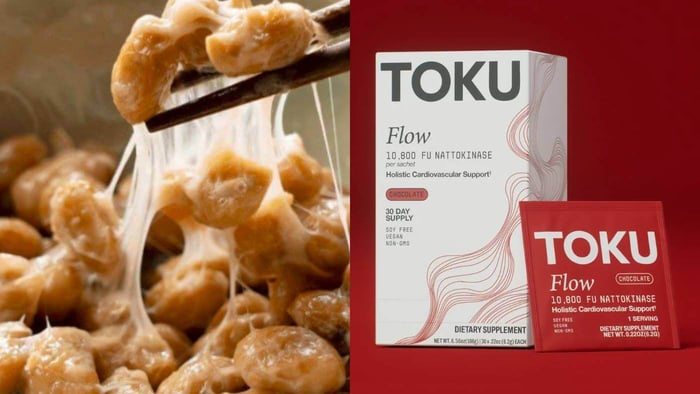
Natto is a traditional Japanese fermented soybean dish produced by cooking soybeans and fermenting them with the bacterium bacillus subtilis natto. The result is a sticky, stringy food with a strong, characteristic odor and flavor that has been a staple in Japan for over a thousand years. Japan is notable for having some of the best heart health in the world.
What is Nattokinase?
Nattokinase is the isolated enzyme responsible for much of natto’s fibrin-dissolving reputation. Discovered and studied since the 1980s, this serine protease is extracted and purified after fermentation, and can be formed into a nattokinase supplement. This purification process allows precise dosing and eliminates the potent taste and smell associated with natto.
Toku Flow is a daily supplement from Toku Health with 10,800 FU for natural, multi-functional cardiovascular support. It combines nattokinase with vitamin K2 and beta-glucan to support balanced cholesterol, optimal blood pressure, and more without the side effects of pharmaceuticals.
How Their Effects Differ
Both natto and nattokinase support heart health, healthy blood flow, and improve circulation by breaking down fibrin, the protein mesh that forms blood clots. Nattokinase achieves this directly and by increasing the body’s own production of plasmin, remaining active in the bloodstream for 8–12 hours after ingestion. Natto in whole food form provides some additional benefits from the fermented soy beans like vitamin K2 (which we add into our Toku Flow nattokinase supplements)
Scientific Evidence
Nattokinase has been the subject of numerous clinical trials. Published research, including a meta-analysis, demonstrates that daily doses can lower blood pressure, reduce fibrinogen levels, and improve arterial elasticity. In contrast, fewer randomized trials exist on natto consumption because it is classified as a food. Large Japanese cohort studies, however, consistently show that people who eat natto four or more times per week experience significantly lower rates of cardiovascular mortality.
Practical Considerations
Taste and texture represent the most immediate difference. Natto’s pungent aroma and slimy consistency are acquired tastes that many people outside Japan find challenging, whereas nattokinase supplements are easy to consume. Precise dosing is another advantage of nattokinase, as enzyme content in commercial natto can fluctuate depending on fermentation conditions and storage.
Toku Flow | Nattokinase Supplement (10,800 FU)

$179.97
Find Your Flow A daily powdered supplement designed to promote clear, efficient blood flow and circulation, ensuring vital nutrients reach your heart and organs while supporting your body’s ability to clear metabolic waste for sustained vitality and overall wellness.… read more
Conclusion
When we consider natto vs nattokinase - both are complementary rather than interchangeable. Natto functions as a complete fermented food that delivers nattokinase, probiotics, some protein and fiber in food form. Nattokinase in supplement form provides targeted, standardized enzyme support without the taste, smell, or perishability concerns.
For focused clot-prevention, heart health, circulation, and blood-pressure benefits - nattokinase remains the more evidence-based and convenient choice. Many individuals successfully incorporate both by enjoying natto several times weekly while using nattokinase on other days.
Always consult your healthcare provider before adding natto vs nattokinase to your routine, particularly if you take medications that affect clotting.
FAQs
What is Natto?
Natto is a traditional Japanese fermented soybean dish produced by cooking soybeans and fermenting them with the bacterium bacillus subtilis natto. The result is a sticky, stringy food with a strong, characteristic odor and flavor that has been a staple in Japan for over a thousand years. Japan is notable for having some of the best heart health in the world.
What is Nattokinase?
Nattokinase is the isolated enzyme responsible for much of natto’s fibrin-dissolving reputation. Discovered and studied since the 1980s, this serine protease is extracted and purified after fermentation, and can be formed into a nattokinase supplement. This purification process allows precise dosing and eliminates the potent taste and smell associated with natto.